Home
Mud and tin, close together
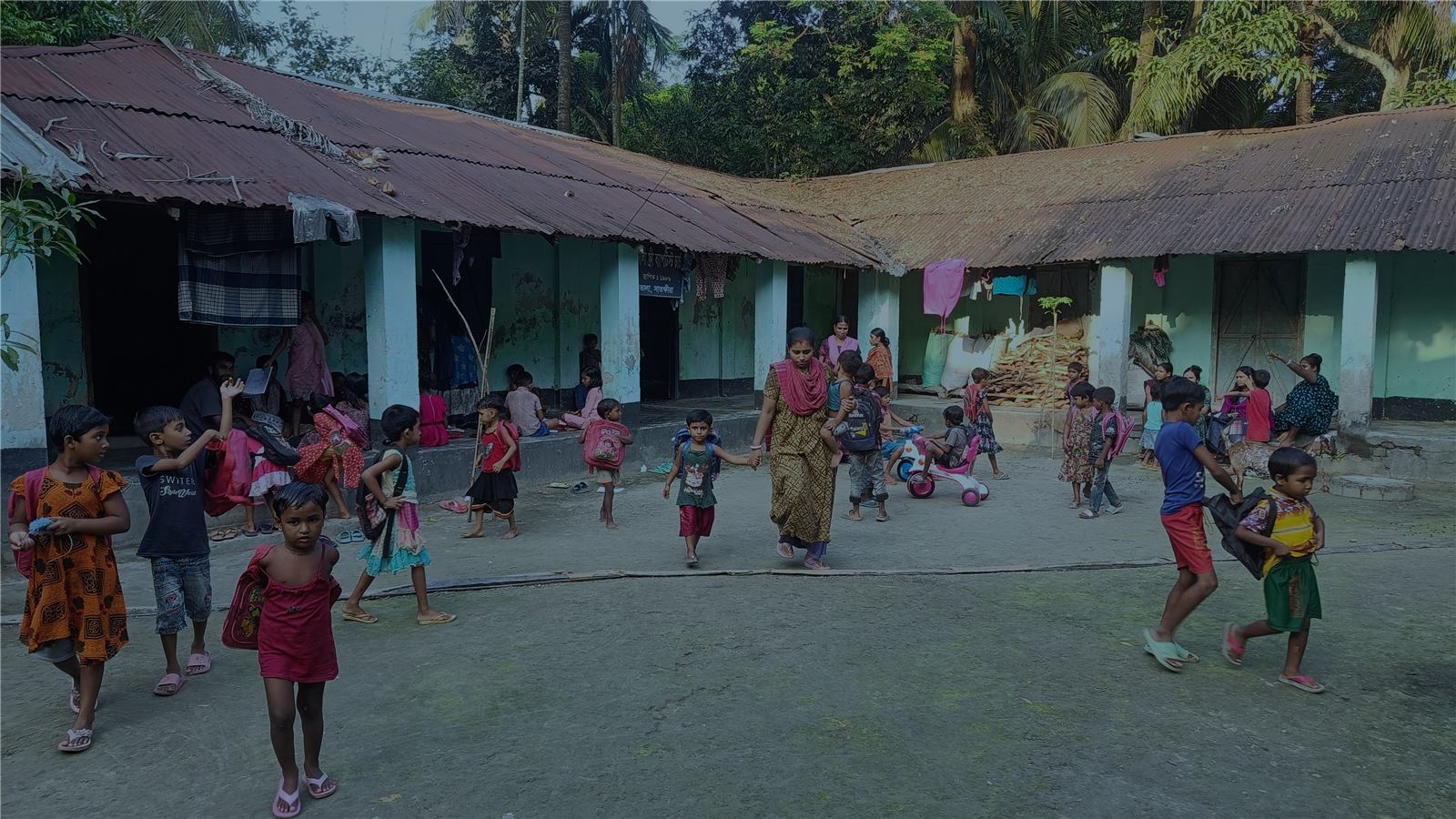
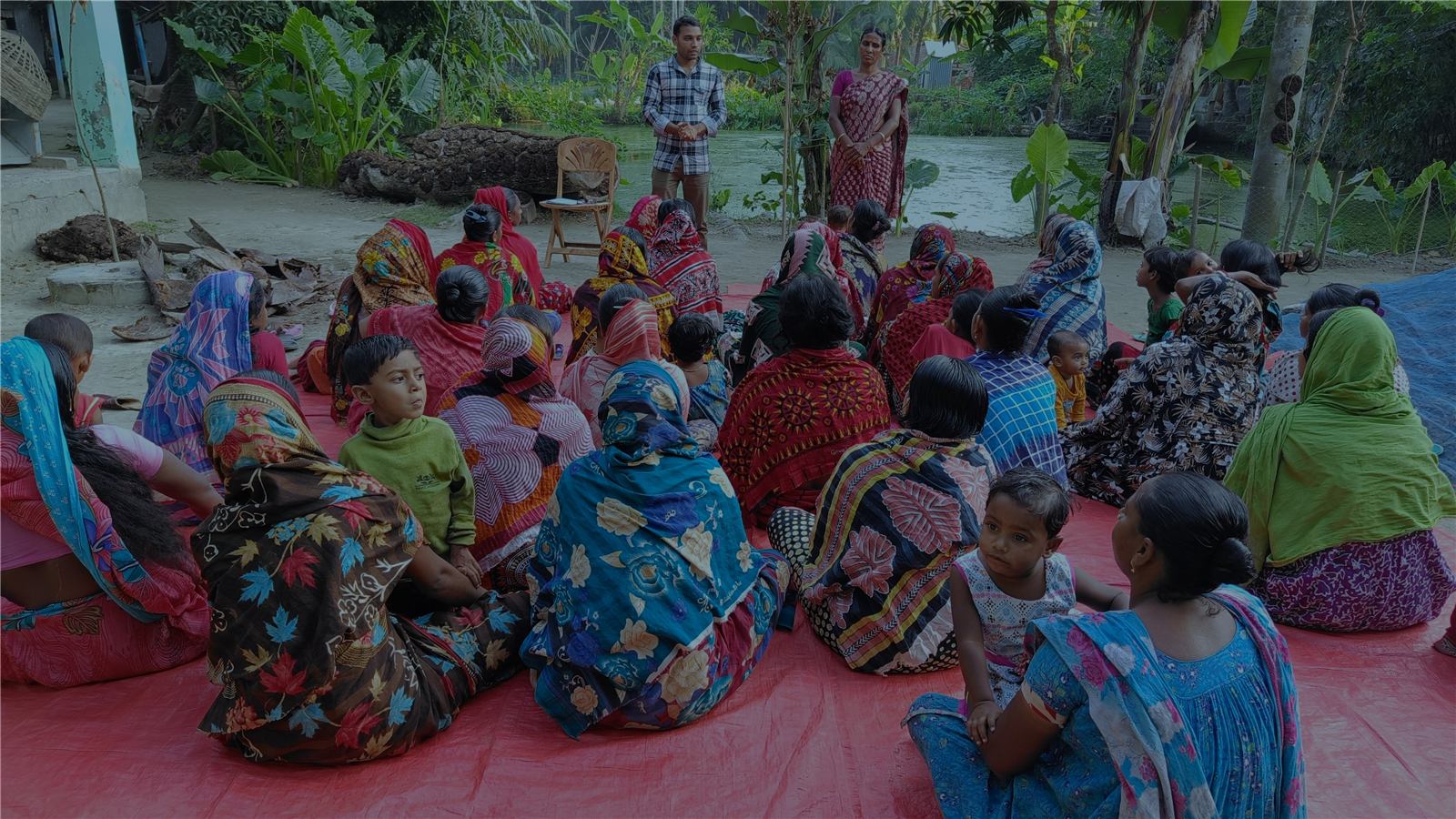
Most families live in simple mud or tin houses with poor sanitation.
The story of Gonali, a village in Satkhira, Bangladesh: its people, its struggle and the change that education, clean water and love are bringing.
Gonali · Tala · Satkhira · Bangladesh
Scroll down to meet the place, the people and the children of Gonali, to understand what they face, and to see what changes when someone chooses to stand beside them.
Gonali is a small village in Tala Upazila, in Satkhira district, in the far southwest of Bangladesh. It is a rural village in a district that borders India. It is the kind of place that does not appear on many maps, and rarely in the news.
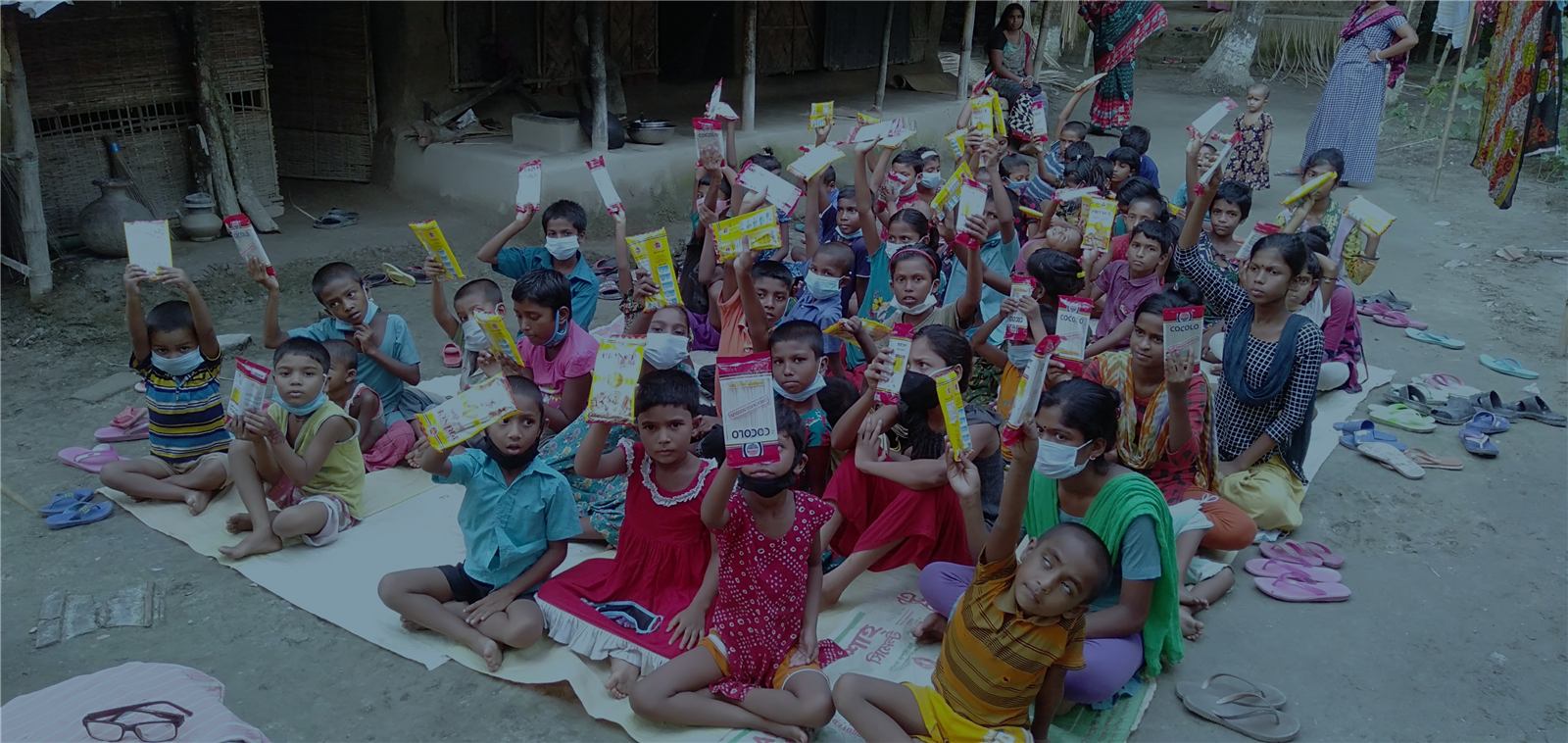
About 250 families live here, close to 1,500 people, most of them from the Rishi community. Most families are Hindu, a few are Christian, and all share the same struggle with poverty and exclusion.22 It is also where The Yahweh Mission began its work, in an open field, with 25 children and no building.
Zoom in from the country to the village
Bangladesh. A country of the Bay of Bengal in South Asia, and the home of the mission.
Khulna Division. The southwest of the country, low, green and crossed by rivers that reach the sea.
Satkhira. A district of about 2.2 million people on the Indian border. Roughly a third of its southern land lies inside the Sundarbans, the largest mangrove forest in the world.18
Tala. A rural upazila where safe drinking water is hard to find: studies here have found high salinity deep in the ground.9
Gonali. A village of about 250 families and close to 1,500 people. This is where our first school opened, and where this story is set.22
The word Dalit means “deprived”, or “broken”. Dalits are not one caste or tribe but a wide group of people pushed to the margins for generations by tradition and by deep social and economic inequality. Under the old caste order they were called “untouchable”: unclean by birth, unwelcome at the same wells, in the same shops, at the same tables.
In Bangladesh there are an estimated five and a half to six and a half million Dalits.1,2 Many work as cobblers, fishermen, weavers, potters, blacksmiths, barbers, cleaners and artisans. The Rishi, the largest community in Gonali, are traditionally leatherworkers.6 They do work the whole country depends on, and are paid and treated as if they were not there.
“For generations the Dalit community has lived on the margins of society. The poverty, poor housing and discrimination pass from one generation to the next.”
From our field report, Breaking Barriers
Dalit children are more likely to be out of school, and those who do enrol can meet harassment from teachers and classmates. Human-rights groups report students being made to clean classrooms or fetch water, and literacy among Dalit women and girls has been recorded far below the national average.3,5
Poverty and the need to work at home do the rest. A child who leaves school at ten rarely finds a way back.
Many Dalit families work in jobs society depends on but pays least for: cleaning, leatherwork, farm labour, fishing and other menial trades. Research on the labour market describes a pattern of exclusion that is growing worse, not better.4
When a family’s work is seen as unclean, so is the family, and the next generation is pushed toward the same jobs.
Dalit families often live in separate colonies with poor housing, little sanitation and uncertain claim to the land under their feet. Land grabbing is a recurring complaint.1,5
In Gonali, most homes are made of mud or tin, and clean water is far away.22
Estimates of the Dalit population run from 5.5 to 6.5 million people, yet caste identity is missing from the national census, so no one knows the true number.1,2,6
Being uncounted means being left out of plans, budgets and promises. It is the quietest part of the exclusion, and one of the heaviest.
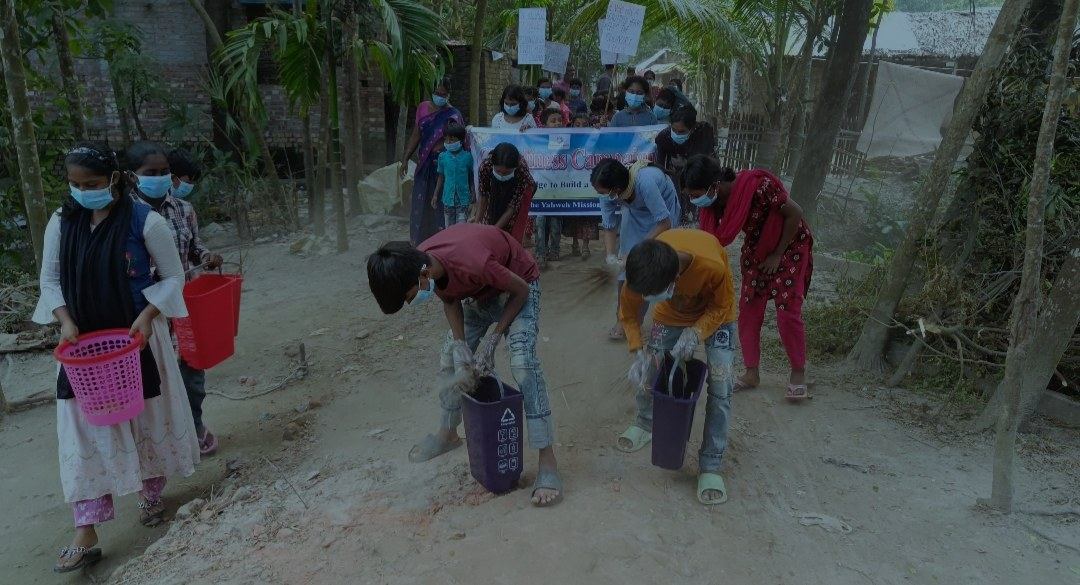
Nobody in Gonali is idle. Life here is long hours, small margins and the daily arithmetic of what can be afforded. Slide through it below.
Most families live in simple mud or tin houses with poor sanitation.
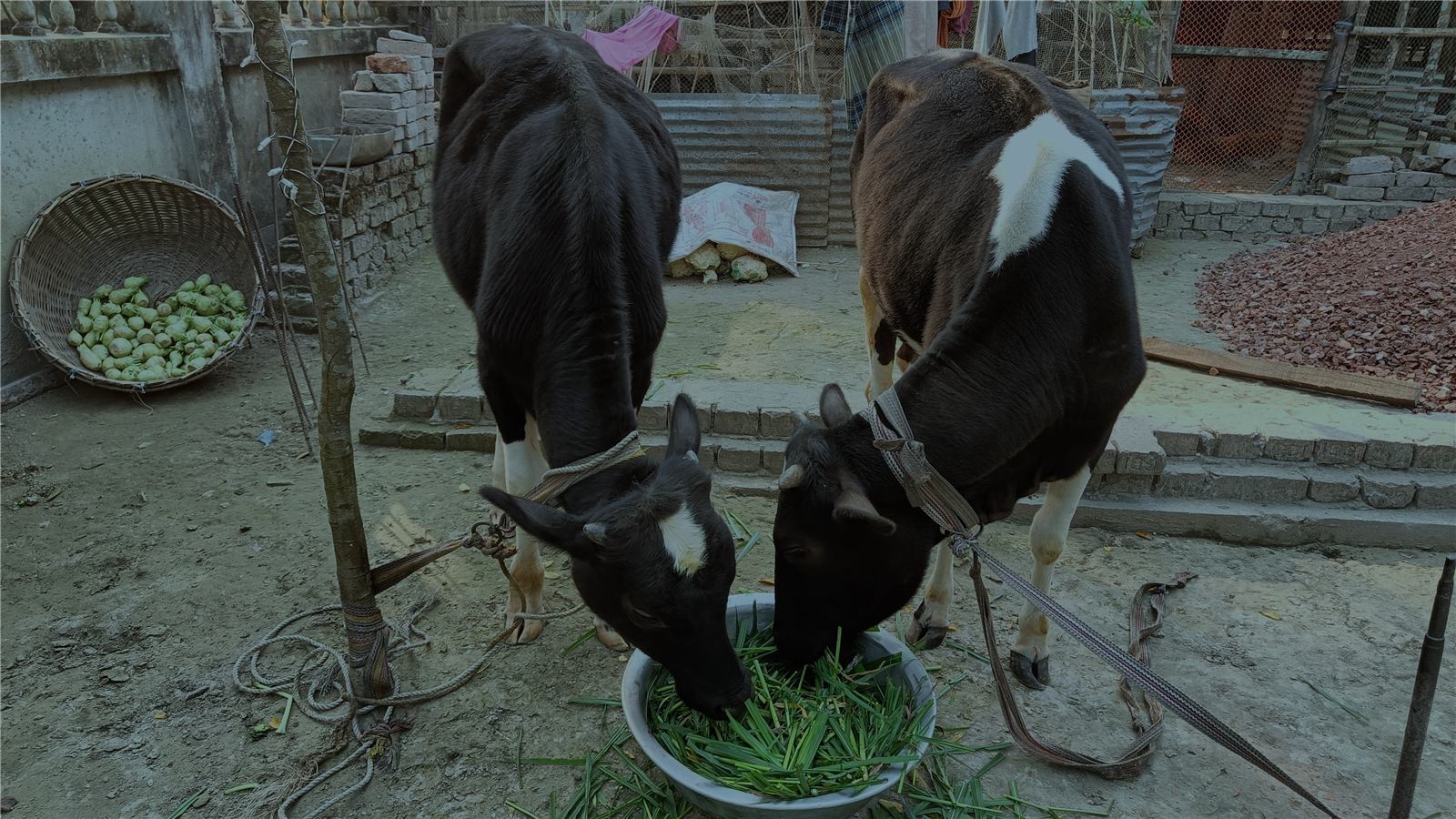
More than 70 percent of households live on daily wage labour, farming, fishing, barbering and handicrafts. The average family income is under Tk 5,000, about $45, a month.
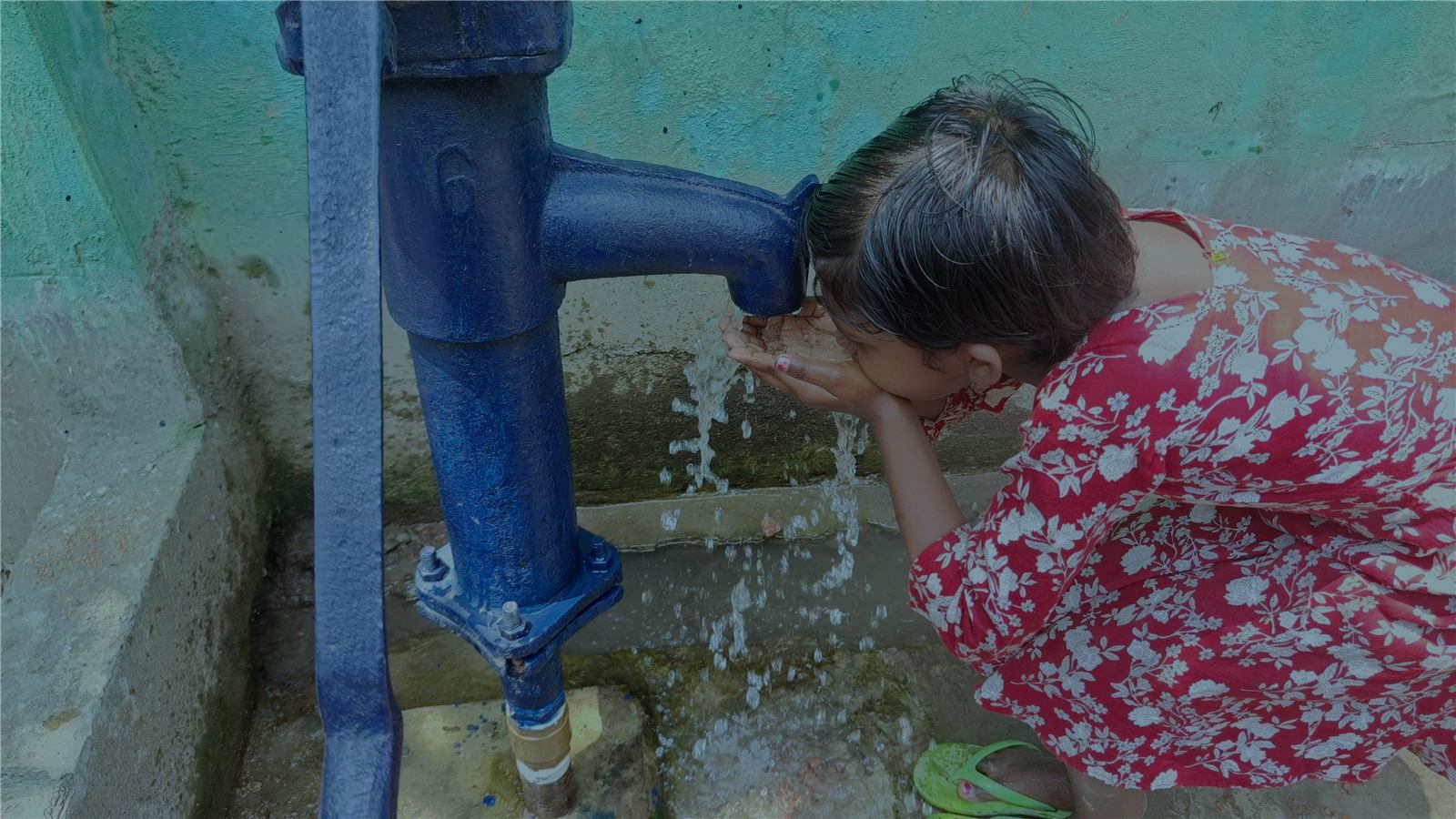
Tube wells, ponds and shallow pumps are the sources. What looks clear can carry arsenic, bacteria or salt, and children pay for it first.
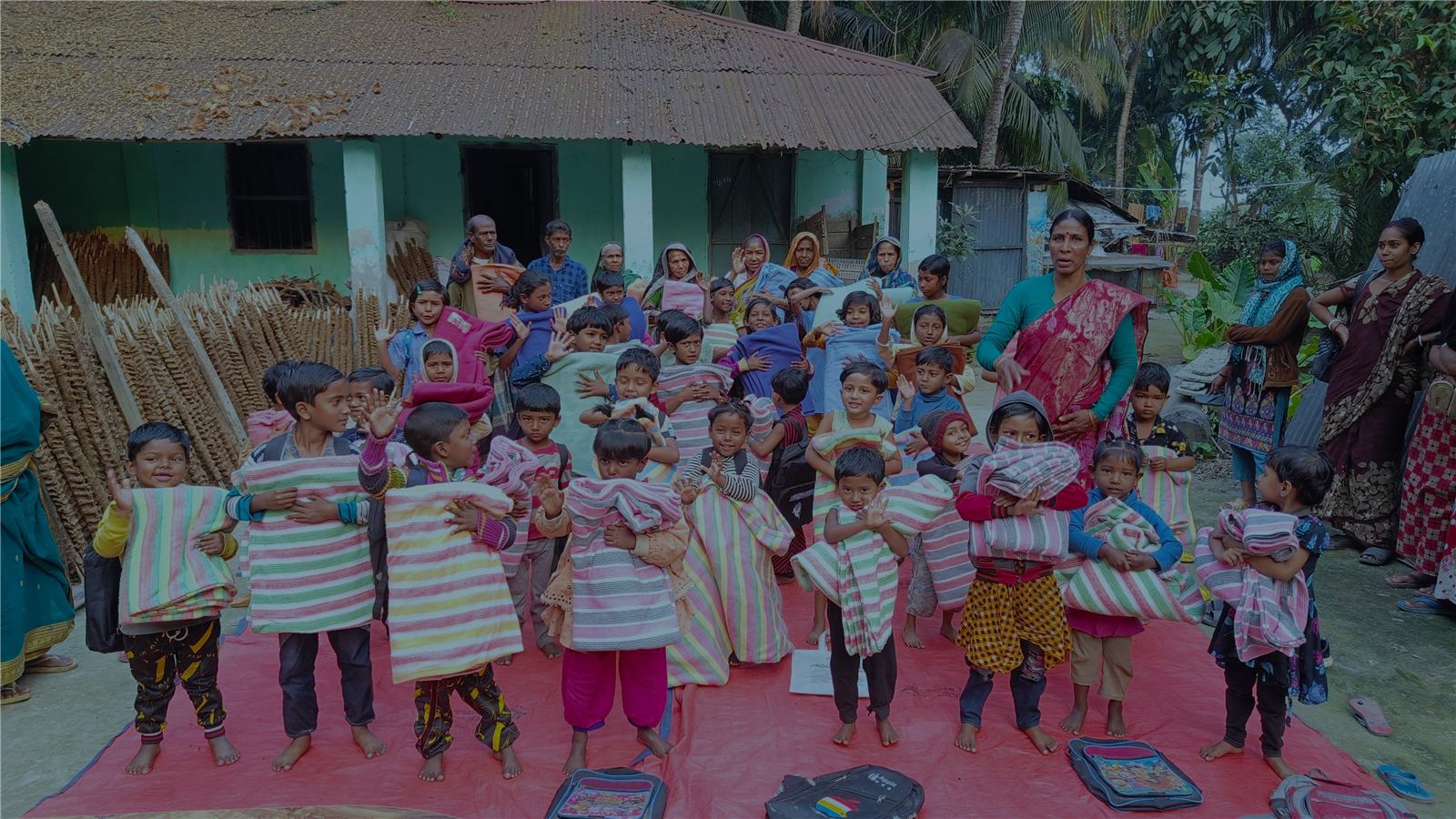
Medical help is often distant and costly. Illnesses that would be treated quickly elsewhere linger, and a missed day of work is a missed meal.
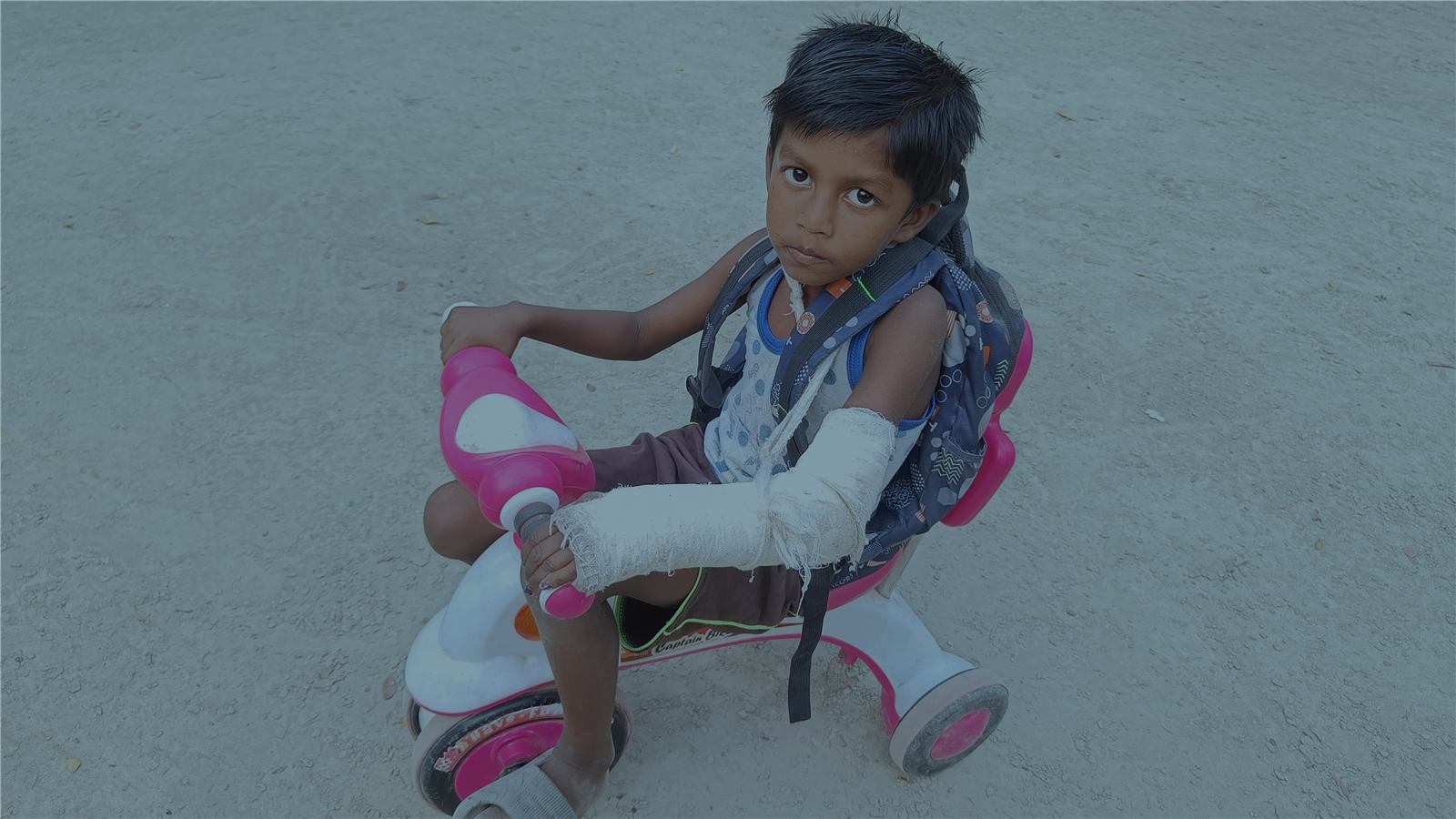
Surveys suggest that in villages like Gonali more than half of children under 14 do not finish primary school, and many work to help their families. Yet they still run, laugh and dream.
Nearly every household lives from one of these. Pick one.
More than 70 percent of households in Gonali depend mainly on daily wages: carrying, digging, harvesting and building for whoever needs a pair of hands that day.22
There is no contract and no sick pay. If the work is not there, or the person is ill, there is no income, and a family can move from “managing” to “hungry” in a week.
Farming here depends on water that is now often too salty or too much. Salt has ruined farmland across Satkhira, and in Tala prolonged waterlogging can drown a crop before it is harvested.11,16
Land is also an issue for Dalit families: complaints of land grabbing and insecure ownership are well documented.1,5
Fishing is one of the traditional trades recorded among Gonali households.22 In Satkhira, shrimp enclosures have replaced many rice fields, and farmers describe heavy losses when disease strikes or storms break the embankments.11
Leatherwork, cutting, stitching and mending, is the traditional trade of the Rishi community, the largest in Gonali.6
It is skilled work, yet it is treated as “unclean” by the caste order, which is why it has been passed down inside one community rather than freely chosen.
Barbering is another traditional trade recorded in our surveys of the village.22 Like other hereditary trades, it is usually inherited, with very little chance to move on to something else.
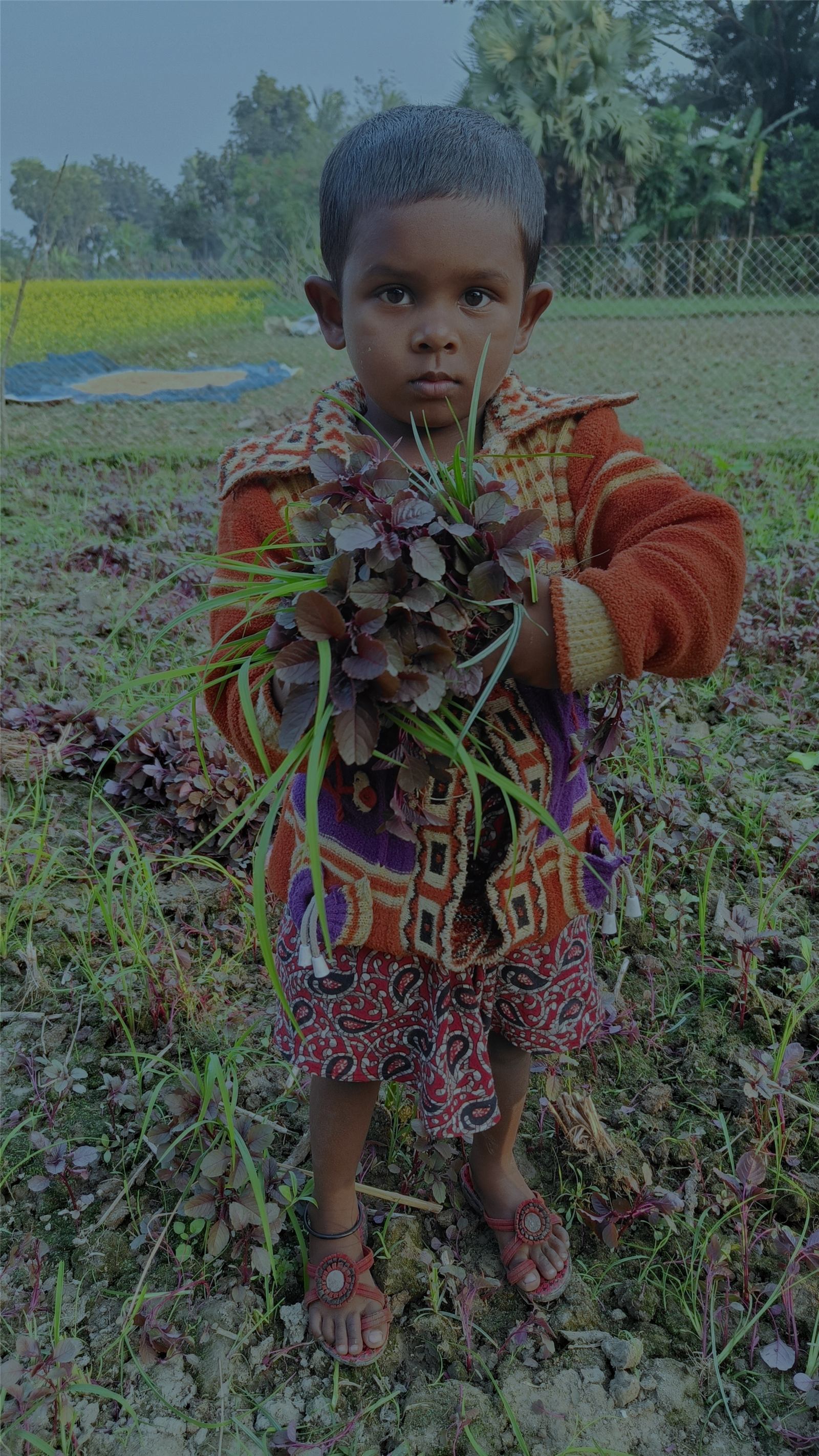
Mats and baskets woven from split bamboo are made at home, often by mothers and children side by side, and sold for very little. In our photographs from the village, children help to split the bamboo and weave.
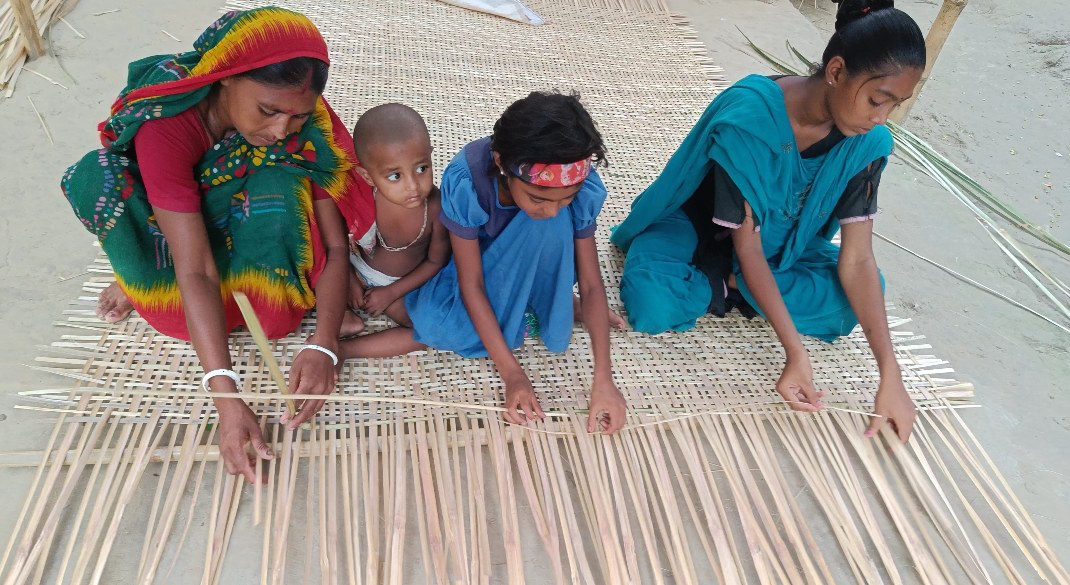
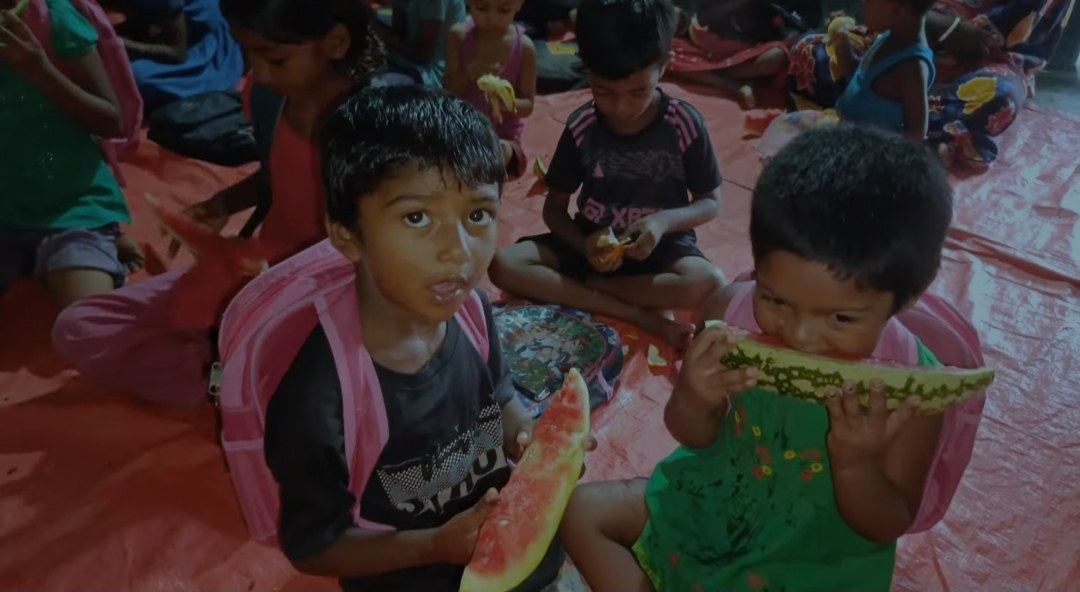
This is why school and a school meal matter: they give a child’s working hours back to the child.
Across Bangladesh the cleaning of streets, drains and toilets is still largely left to Dalit communities such as the Harijan, and the stigma of the work follows them home.7
Drive through Gonali and you would see green fields and small houses. What you would not see are the numbers behind them. Keep scrolling: each photograph tells one of them.
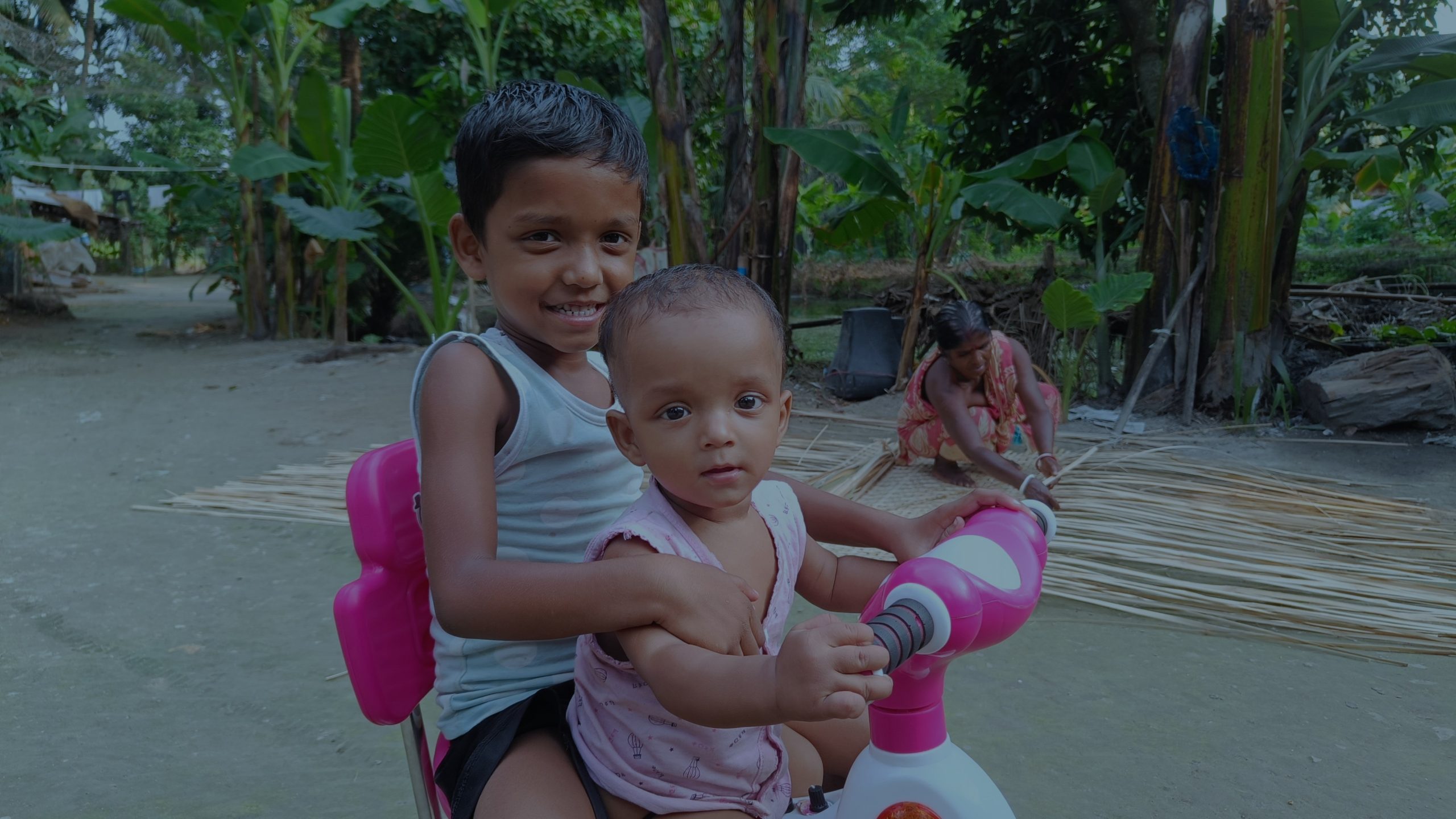
In 2022 the average household in Bangladesh had an income of about Tk 32,422 a month.20 Our surveys put the average family in Gonali below Tk 5,000, roughly one-sixth of that.22 It comes to about Tk 165 a day, for a whole family. (The two figures come from different surveys, so treat the comparison as a guide, not an exact ratio.)
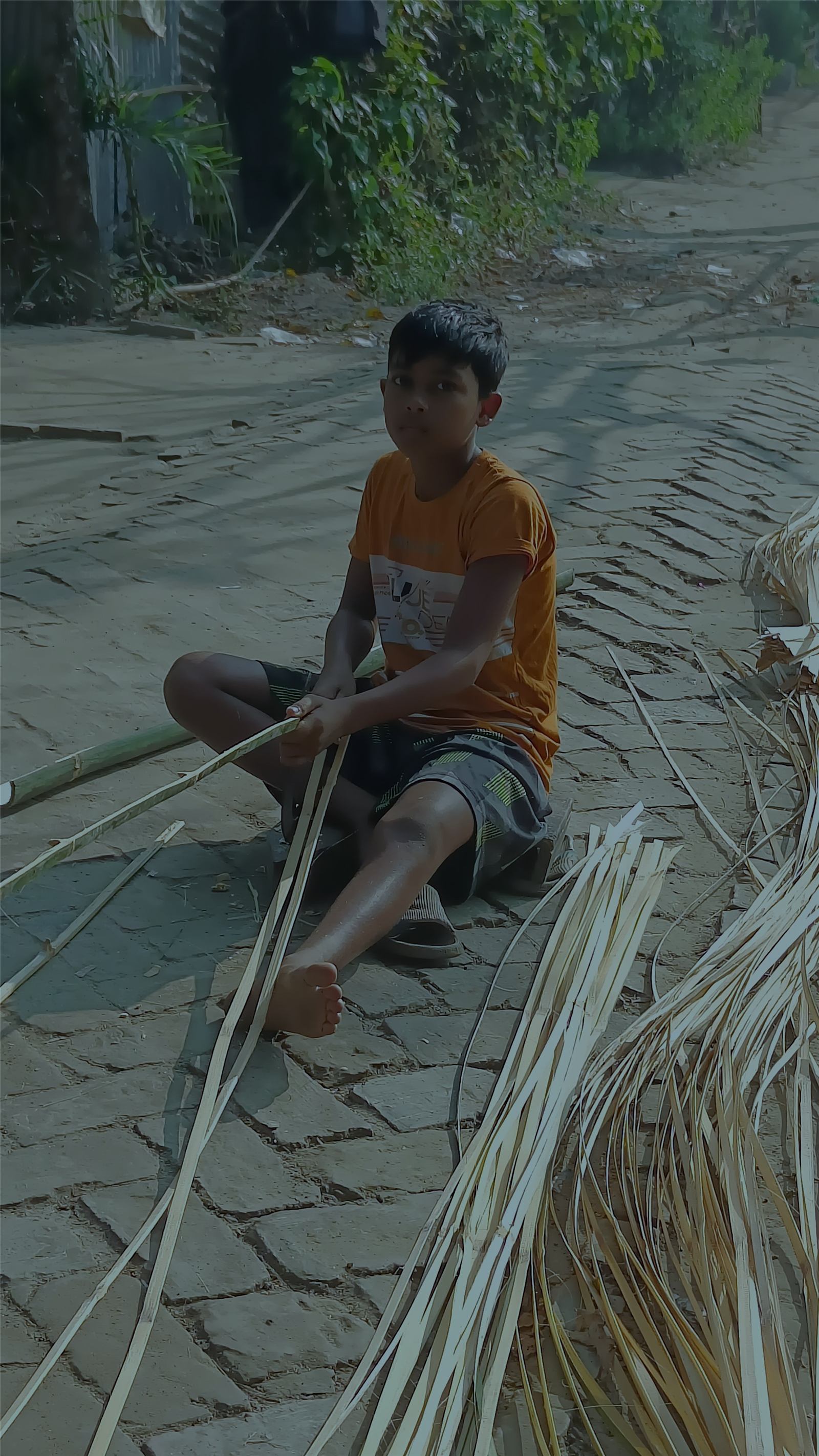
When pay comes by the day, a day off means a day without pay: no sick leave, no savings, no notice. A week of fever, or a week of rain, can mean a week without money for food. This is why one illness can push a family from “managing” to “hungry”.22
Arsenic has no colour, no taste and no smell, so a family cannot tell by looking, tasting or smelling. Human Rights Watch estimates about 20 million people in Bangladesh drink water above the national standard.14 That is why testing wells matters more than trusting how water looks.
Salt is not only a problem for crops. A study of women in coastal Dacope, on the same coast, found that pregnant women whose drinking water had the highest sodium had about 4.6 times the odds of pre-eclampsia, a dangerous rise in blood pressure, compared with those who drank the least salty water.15 Rainwater users were at lower risk than tube-well users.
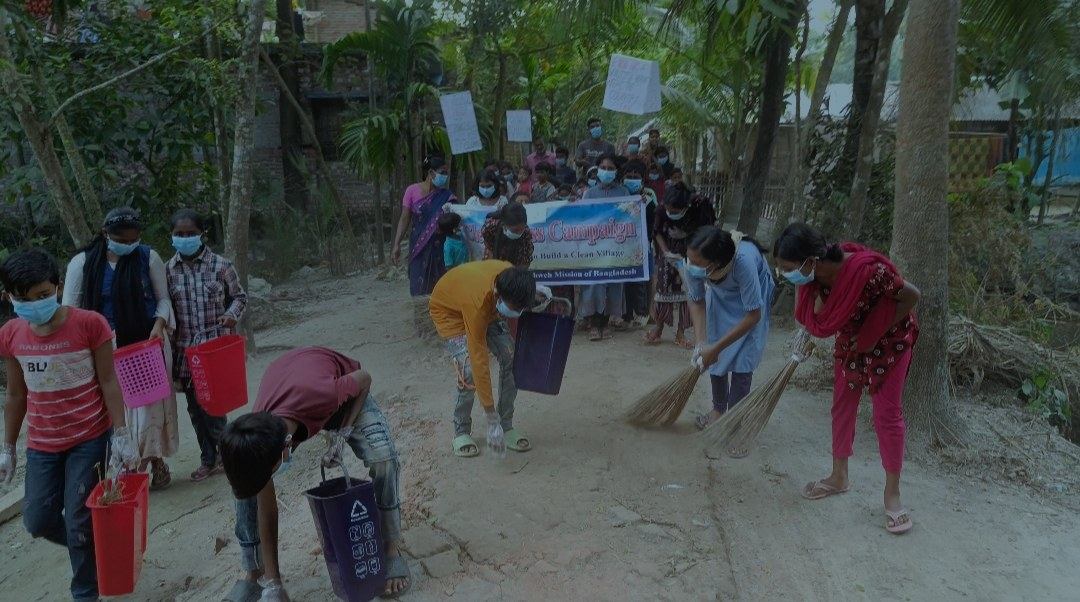
Tala is known for waterlogging. Silt has choked the Kobadak River and blocked the drains that should carry monsoon water away. In bad years, reports describe hundreds of thousands of people in the Kobadak basin cut off for about two months, with crops under water.16
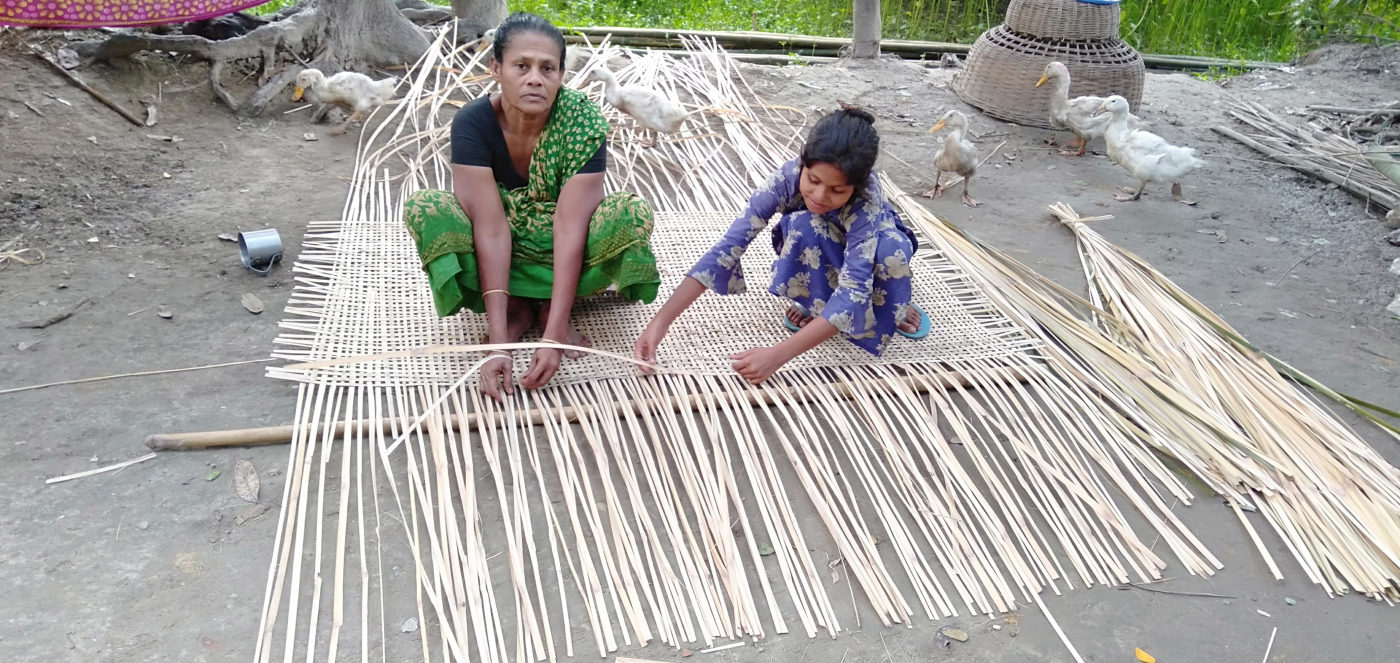
The national child labour survey of 2022 counted 3.5 million working children aged five to seventeen, about 8.9 percent, and more than a million of them in hazardous work.19 In Gonali we see the smaller version of it: children splitting bamboo and weaving mats beside their parents when they should be in a classroom.
Southwest Bangladesh is one of the places where the sea is coming inland. Salt is moving into the ground water and into the soil, and arsenic and iron taint many wells.8,10 In Tala, studies have found salt in deep aquifers at several times the recommended level.9 When Cyclone Aila broke the coastal embankments in 2009, the sea flooded the fields of Satkhira, and many have never fully recovered.11,12
For a child in Gonali this means stomach illness, weakness and missed school. For a parent it means choosing between medicine and food. We are testing wells so families know which are safe, introducing household filters, helping with rainwater harvesting in the monsoon, and teaching mothers safe storage.
Clean water is not a luxury. It is where health, and then school, begins.
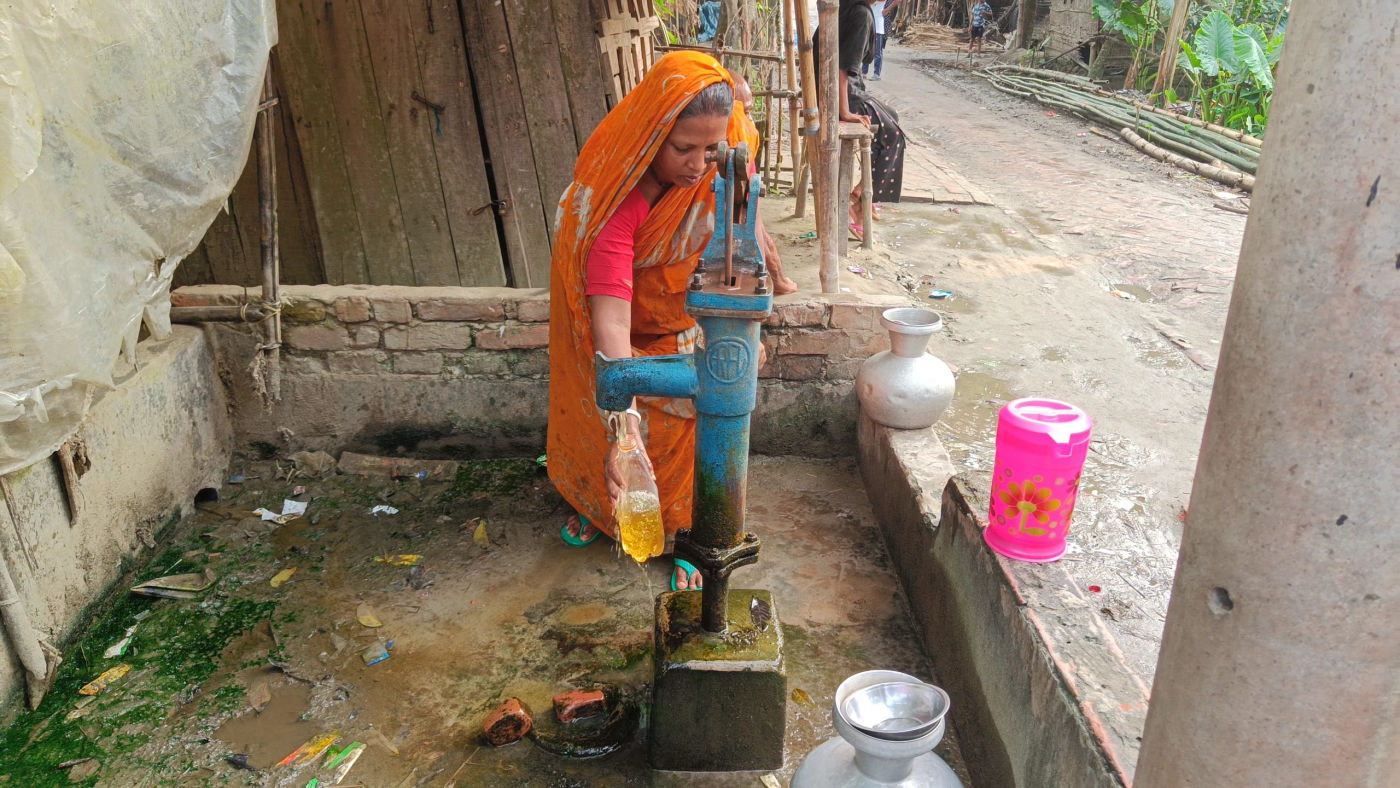
Look at the bottles on the well ledge in this photograph. The water in them, drawn from the village well, is pale yellow. It is easy to see that something is not right.
The danger is that often it is not easy to see. Arsenic has no colour, taste or smell, and salty water can look perfectly clear.10,14 So the answer is not to trust our eyes. It is to test the well, filter the water, and store it safely, which is what we do.
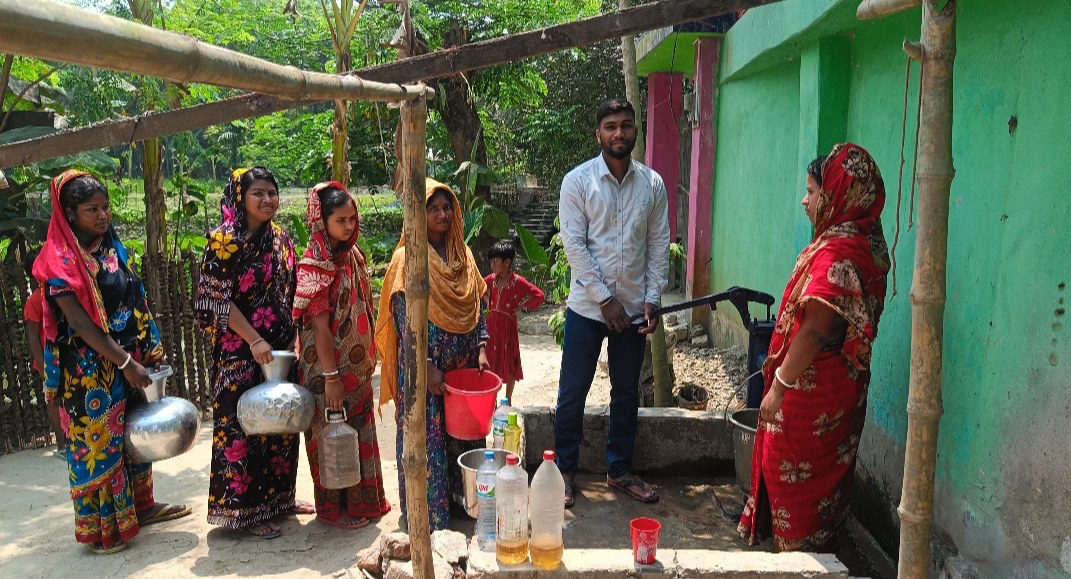 Pale yellow water
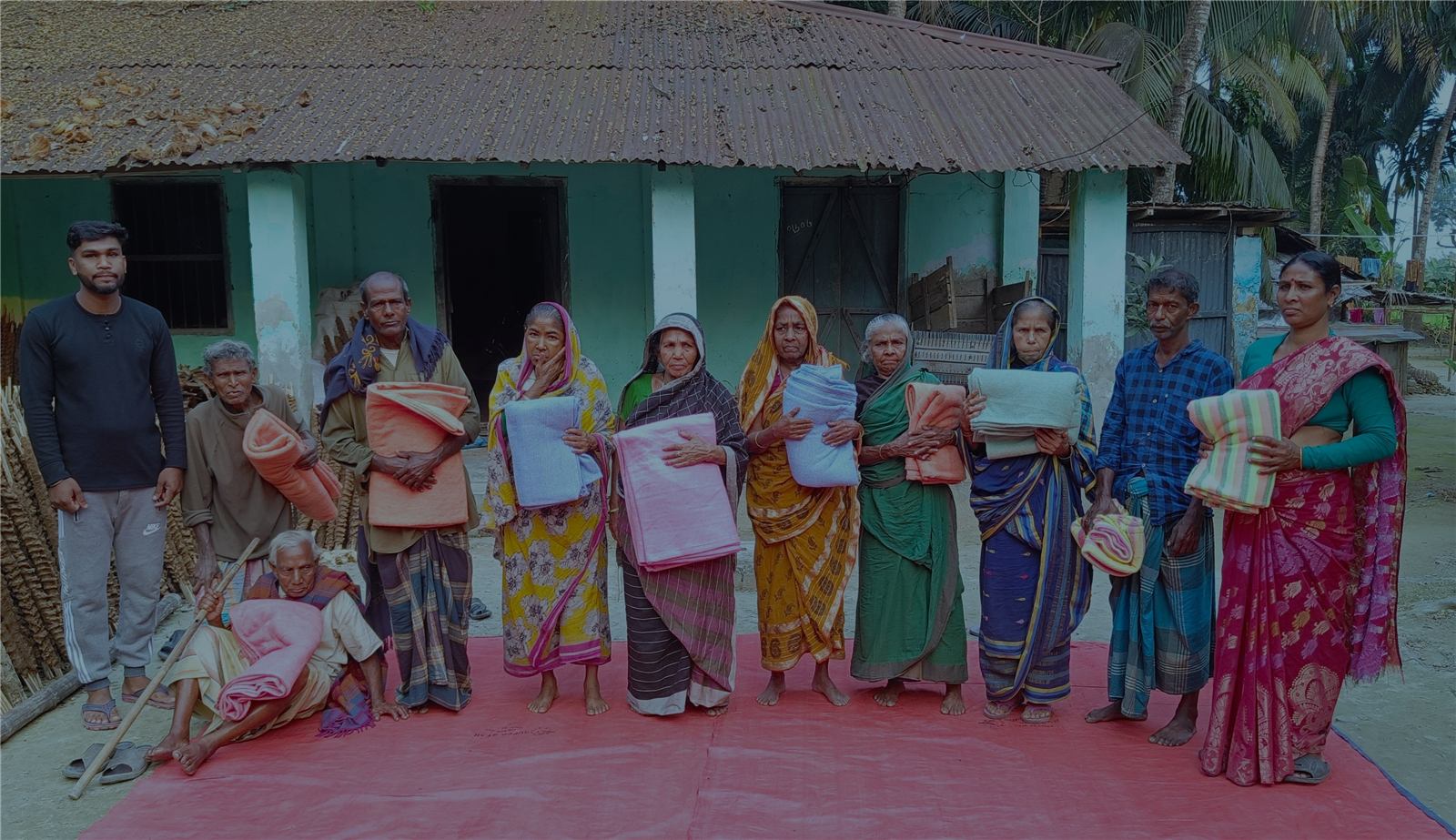
A meal, a coat or a gift of money helps for a day, and we give all of them when they are needed. But when the food is eaten, the same door is still shut. Education is the one gift that opens it.
A meal is a real answer to a real hunger, and it lasts for a day. Without something more, tomorrow looks exactly like today, and so does the next generation.
A child who reads can read a contract, a medicine label, a ballot. She can earn more, marry later, and teach her own children. Education lets a family climb out of a trade it was born into, and it changes how the rest of the village sees them too.
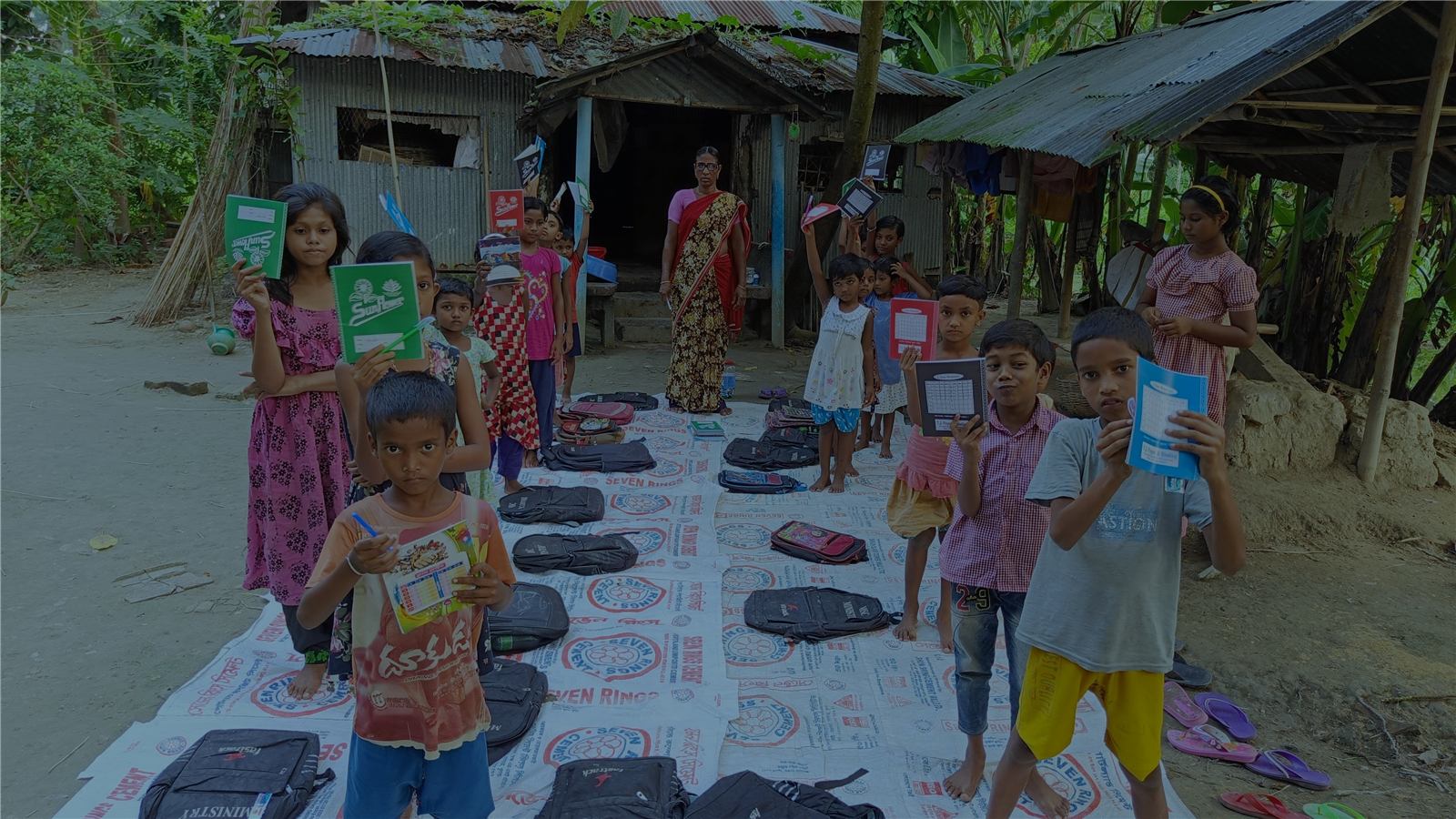
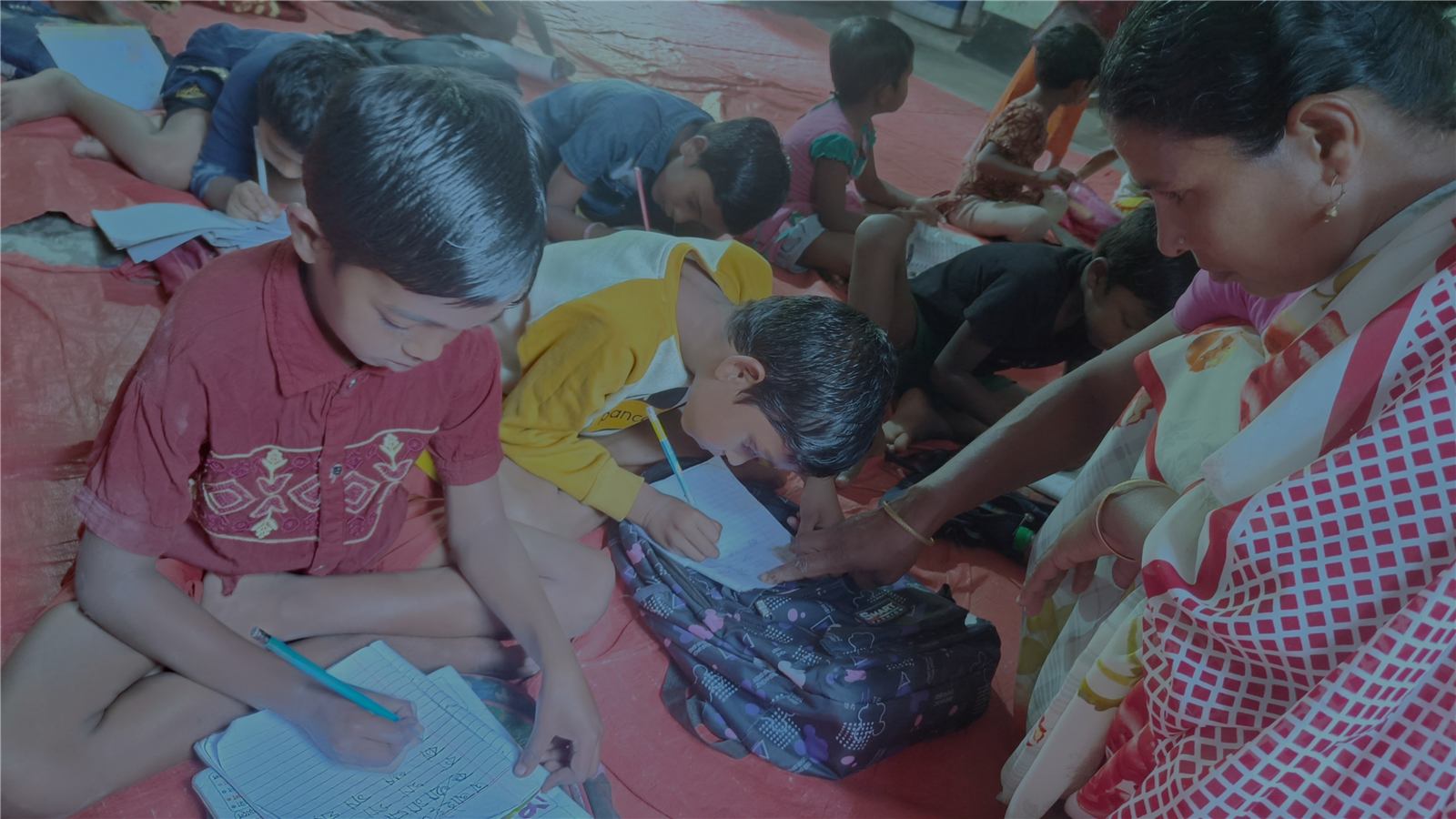
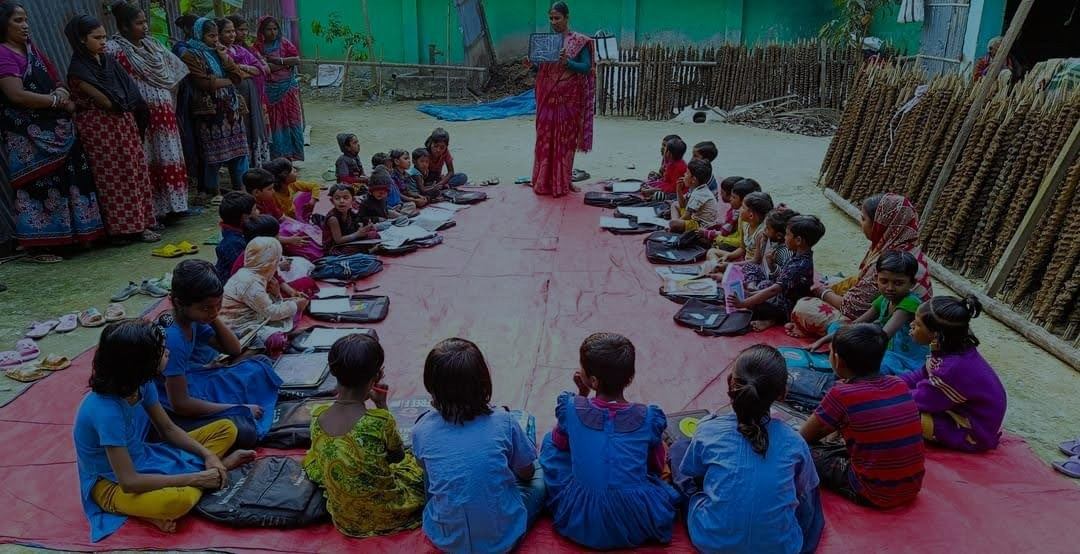
The Gonali Yahweh Mission School began in an open field with 25 children. Soon there were 35, then 50, and it now teaches from nursery to grade five, six days a week, from 8 a.m. to 2 p.m. Children learn reading, writing and maths, and also nutrition, health, faith, dignity and compassion.
Joy Sarker leads the school and teaches, alongside Champa Sarkar and Eti Das, with Lipika Das as a volunteer teacher. They know every child by name.
School is the centre, and around it is everything a child needs to be able to learn.
“Truly I tell you, whatever you did for one of the least of these brothers and sisters of mine, you did for me.”
Matthew 25:40
Every child and every family in Gonali is created in God’s image and deserves dignity, opportunity and love. That is the reason behind everything on this page. We do not go to Gonali to be seen, or to change what people believe by force. We go because Jesus told us that the people the world overlooks are the ones He stands with.
Families who once felt forgotten now gather in prayer and fellowship. They gather to pray and share their testimonies with others in the community. Faith here is not a lecture. It is being known by name, and being told, over and over, that you matter.
Change in Gonali does not arrive all at once. It starts with one child, and it spreads because people who are helped become the ones who help. Tap through the stages.
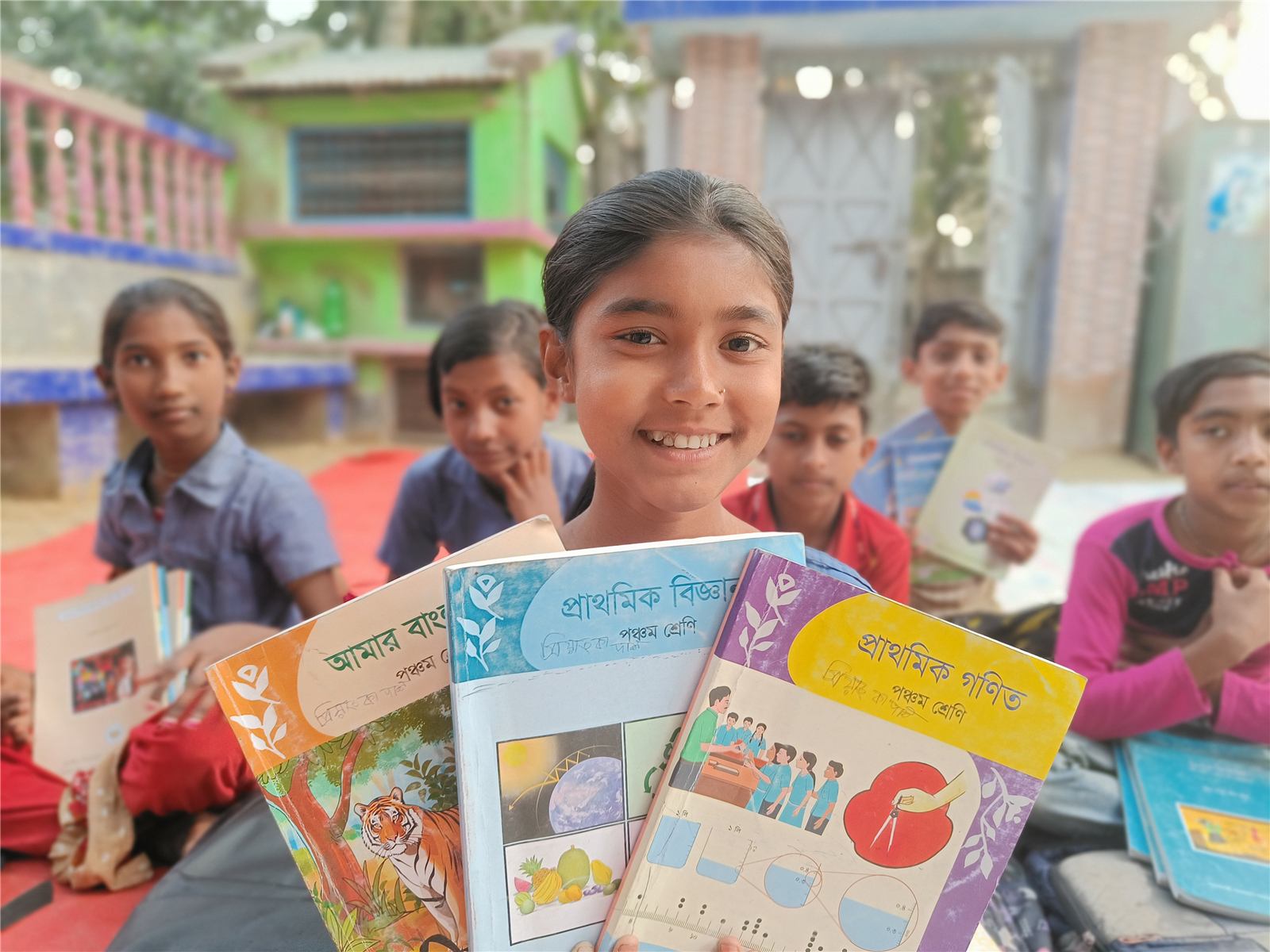
A child who can read is a child who can be heard. She brings a book home, and someone in the house wants to learn from it.
Parents who see their child learning begin to hope, keep her in school, and stop believing that this is simply how life is.
Other families notice. They ask how, they send their children too, and they begin to help one another with the little they have.
A village where children finish school, drink clean water and know they are valued becomes a village that can speak for itself.
Priyanka Das grew up with almost no chance to study. Today she is in Grade 5, and she wants to become a teacher.
It began with 25 children and no building. Today the school teaches from nursery to grade five, six days a week.
About 250 families, nearly 1,500 people, and a shared struggle with poverty and exclusion. This is Gonali.
You have seen the village, the people and the promise. Your gift goes to the school, the meals, the clean water and the community work you have just read about, run by people on the ground who know every family. The Yahweh Mission is a 501(c)(3) charity, so your gift is tax-deductible in the United States.
Every figure on this page has a named source, so you can check it yourself.